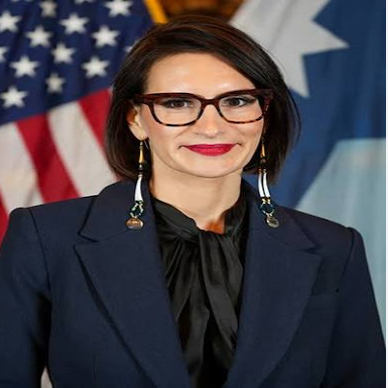
Margaret Ann Hartmann Flanagan (Ojibwe: Gizhiiwewidamookwe) is an American politician, Ojibwe activist, and public servant. Rising to national prominence during the 2026 midterm elections, she captured worldwide attention by winning a historic U.S. Senate race in Minnesota as a member of the Minnesota Democratic–Farmer–Labor Party (DFL), becoming the first Native American woman ever elected to the United States Senate.
Quick Facts
Profile Detail
Information
Full Name
Margaret Ann Hartmann Flanagan
Date of Birth
September 22, 1979
Age
47 years old (as of 2026)
Place of Birth
St. Louis Park, Minnesota, United States
Profession
U.S. Senator-elect, Lieutenant Governor, Activist
Eye Color
Brown
Hair Color
Brown
Estimated Net Worth
$100,000 – $1,000,000
What is Margaret Ann Hartmann Flanagan’s full name and Ojibwe given name?
Margaret Ann Hartmann Flanagan serves as her full legal name. Her traditional Ojibwe given name is Gizhiiwewidamookwe. This traditional name translates literally to mean a woman who speaks with a clear and loud voice.
When was Peggy Flanagan born?
Peggy Flanagan entered the world on September 22, 1979. This specific birthdate marks the beginning of her life in Minnesota. She celebrates her birthday each autumn.
What federal legislative position was Peggy Flanagan elected to?
Peggy Flanagan secured election as the United States senator-elect representing Minnesota. This historic victory elevated her from state executive leadership to federal office. She prepares to take her oath of office in Washington.
Which political party does Peggy Flanagan belong to?
Peggy Flanagan maintains an active membership within the Minnesota Democratic–Farmer–Labor Party. This organization functions as the state affiliate of the national Democratic Party. She has represented DFL values throughout her elected career.
What state executive office has Peggy Flanagan held since 2019?
Peggy Flanagan has served as the 50th lieutenant governor of Minnesota since January 2019. She won election to the post alongside Governor Tim Walz. The duo secured reelection to their executive offices in 2022.
Which legislative body did Peggy Flanagan serve in from 2015 to 2019?
Peggy Flanagan served as a member of the Minnesota House of Representatives from 2015 to 2019. She won election to the chamber during a 2015 special election. Her tenure in the state legislature preceded her statewide executive run.
Where did Peggy Flanagan grow up during her youth?
Peggy Flanagan spent her childhood growing up in St. Louis Park, Minnesota. This municipality operates as an inner-ring suburb located just outside Minneapolis. Her upbringing in the region shaped her local community ties.
Of which tribal nation is Peggy Flanagan a citizen?
Peggy Flanagan holds formal citizenship as a member of the White Earth Nation. Her Indigenous heritage forms a central part of her personal and political identity. She represents her community with immense pride.
What was the focus of Peggy Flanagan’s very first political career work?
Peggy Flanagan began her political career working as an organizer for the urban Native American community. She advocated for families and pushed for systemic improvements. This grassroots activism launched her broader public service journey.
During which years did Peggy Flanagan serve on the Minneapolis Public Schools Board?
Peggy Flanagan served as an elected member of the Minneapolis Public Schools Board from 2005 to 2009. She won her initial seat in a crowded 2004 election field as a political newcomer. She later returned to the board briefly for a temporary appointment.
What historic milestone did Peggy Flanagan achieve as lieutenant governor regarding women of color in Minnesota?
Peggy Flanagan made history as the first woman of color ever elected to statewide office in the state of Minnesota. Her 2018 victory broke longstanding barriers in local government representation. This milestone paved the way for future diverse leaders.
What national distinction did Peggy Flanagan hold regarding Native American women in executive office?
At the time of her initial statewide election, Peggy Flanagan stood as the highest-ranking Native American woman to hold an elected executive office anywhere in the United States. Her position brought unprecedented national representation to Indigenous women. She continued to break political glass ceilings throughout her career.
What are some of the key progressive policy positions Peggy Flanagan has championed?
Peggy Flanagan identifies as a progressive and has actively advocated for Medicare for All and universal childcare. Her platform has also included calls to reform immigration enforcement and shift U.S. foreign policy regarding Israel. These policy stances define her legislative vision.
When did Peggy Flanagan announce her candidacy for the United States Senate?
Peggy Flanagan announced her official candidacy for the U.S. Senate on February 13, 2025. This launch followed the announcement by incumbent Senator Tina Smith that she would not seek reelection. The campaign immediately drew intense national media interest.
When did Peggy Flanagan secure the DFL nomination for the Senate seat?
Peggy Flanagan secured the DFL nomination for the U.S. Senate on August 11, 2026. She emerged victorious following a hard-fought primary contest. This primary win advanced her to the general election ballot.
Who was Peggy Flanagan’s Republican opponent in the 2026 U.S. Senate general election?
Peggy Flanagan faced off against Republican nominee Michele Tafoya in the general election. The high-profile matchup drew heavy outside spending and voter turnout across Minnesota. Her campaign ultimately prevailed in November.
When did Peggy Flanagan win the general election for the U.S. Senate?
Peggy Flanagan won the U.S. Senate general election on November 3, 2026. This electoral victory sealed her transition from state executive leadership to federal governance. The outcome was celebrated by supporters nationwide.
What historic national milestone did Peggy Flanagan achieve with her U.S. Senate election victory?
Peggy Flanagan made history by becoming the first Native American woman ever elected to the United States Senate. Her landmark victory broke a monumental barrier in federal legislative history. This achievement brought unprecedented Indigenous representation to the upper chamber of Congress.
Early Life and Background
Margaret Ann Hartmann Flanagan was born on September 22, 1979, in St. Louis Park, Minnesota, an inner-ring suburb of Minneapolis. Raised in a single-parent household by her mother, Patricia Elizabeth Flanagan—a lifelong DFL activist who worked for Hubert Humphrey—and with her father, Marvin Manypenny, serving as an American Indian land rights and sovereignty activist, she grew up of Irish and Ojibwe descent and is a proud citizen of the White Earth Nation. She graduated from St. Louis Park High School and earned a bachelor’s degree in child psychology with a minor in American Indian studies from the University of Minnesota in 2002.
On what date and in what city was Peggy Flanagan born?
Peggy Flanagan entered the world on September 22, 1979. Her birth took place in the community of St. Louis Park, Minnesota. This municipality operates as an inner-ring suburb of Minneapolis.
Who raised Peggy Flanagan during her upbringing?
Peggy Flanagan was raised primarily by her mother, Patricia Elizabeth Flanagan. Her mother worked as a lifelong Democratic–Farmer–Labor Party activist who had previously worked for Hubert Humphrey. She raised her daughter in a single-parent household.
What political background did Peggy Flanagan’s mother have?
Peggy Flanagan’s mother, Patricia Elizabeth Flanagan, maintained a lifelong career as a DFL activist. She contributed her time and efforts to local progressive causes and worked for political figures like Hubert Humphrey. This activist background shaped her daughter’s early worldview.
What was the profession and activism of Peggy Flanagan’s father?
Peggy Flanagan’s father, Marvin Manypenny, worked as an American Indian land rights and sovereignty activist. He dedicated his life to advocating for Indigenous legal and territorial rights. His advocacy contributed to the family’s deep community roots.
What forms of public assistance did Peggy Flanagan’s household rely on during her childhood?
Peggy Flanagan grew up in a single-parent household that relied at times on various forms of public assistance. This support included food assistance, Medicaid, child-care aid, and a Section 8 housing voucher. These experiences grounded her future advocacy for working-class families.
What is Peggy Flanagan’s ethnic and tribal heritage?
Peggy Flanagan is of Irish and Ojibwe descent. She holds formal citizenship as a member of the White Earth Nation. Her Indigenous heritage forms a foundational pillar of her personal and political identity.
Of which tribal nation is Peggy Flanagan a citizen?
Peggy Flanagan holds official citizenship as a member of the White Earth Nation. This tribal affiliation connects her deeply to her Ojibwe roots. She carries this identity proudly throughout her public career.
Which high school did Peggy Flanagan attend for her secondary education?
Peggy Flanagan earned her high school diploma from St. Louis Park High School. This local educational institution is situated in her hometown in Minnesota. Her time there preceded her university studies.
In what year did Peggy Flanagan graduate from the University of Minnesota?
Peggy Flanagan completed her undergraduate studies at the University of Minnesota in the year 2002. This graduation marked a major educational milestone in her young adult life. She earned her bachelor’s degree on campus.
What specific bachelor’s degree and minor did Peggy Flanagan earn in college?
Peggy Flanagan earned a Bachelor of Arts degree focusing on child psychology. She complemented her major with a minor in American Indian studies. Her academic coursework laid the groundwork for her early career advocating for children and families.
Political and Executive Career
Margaret transitioned from grassroots community organizing and local education advocacy to high-profile executive and legislative leadership.
Grassroots and Local Office: She began her career organizing for the urban Native American community and advocating for families within the Minneapolis public school system. In 2004, she won a seat on the Minneapolis Public Schools Board, serving from 2005 to 2009. She later served as executive director of the Children’s Defense Fund-Minnesota, advocating successfully to raise the state’s minimum wage.
State Legislative and Executive Leadership: She was elected to the Minnesota House of Representatives in a 2015 special election, serving until 2019. In 2018, she was elected lieutenant governor of Minnesota as Tim Walz’s running mate, and the ticket was reelected in 2022. As lieutenant governor, she focused on paid family leave, universal free school meals, housing stability, and addressing the crisis of missing and murdered Indigenous relatives.
U.S. Senate Breakthrough: Following U.S. Senator Tina Smith’s decision not to seek reelection, Margaret launched her campaign for the U.S. Senate. She secured the DFL nomination and achieved a historic victory in the November 2026 general election by defeating Republican nominee Michele Tafoya, breaking a monumental glass ceiling as the first Native American woman elected to the United States Senate.
Personal Life and Family
Margaret maintains a grounded personal life in Minnesota. She resides in St. Louis Park and is married to Tom Weber, a former news host. She has a daughter, Siobhan, from a previous marriage. Active in her faith, she is Roman Catholic and attends the Church of the Ascension in North Minneapolis.
Who is the father of Peggy Flanagan’s daughter, and when did their marriage end?
Peggy Flanagan shares a daughter with her former husband, Tim Hellendrung. Their marriage officially came to an end in 2017. Both individuals moved forward following the separation.
In which Minnesota municipality does Peggy Flanagan make her home?
Peggy Flanagan resides in the city of St. Louis Park, Minnesota. This suburb serves as her longtime residential base. She remains closely connected to her local community there.
What religious denomination does Peggy Flanagan practice, and which church does she attend?
Peggy Flanagan practices the Roman Catholic faith. She attends services at the Church of the Ascension located in North Minneapolis. Her faith plays a supportive role in her personal life.
When did Peggy Flanagan announce her relationship with news host Tom Weber?
Peggy Flanagan publicly announced her relationship with Minnesota Public Radio News host Tom Weber on January 12, 2018. She shared the news via her personal Facebook page. The announcement prompted immediate professional adjustments at the media outlet.
How did Minnesota Public Radio respond professionally to Peggy Flanagan’s relationship with Tom Weber?
Minnesota Public Radio reassigned Tom Weber following the relationship announcement to prevent any perceived conflicts of interest. The station stipulated that he would no longer cover the governor’s race, the legislature, or any public policy topics related to the 2018 election. This reassignment ensured journalistic integrity during the campaign cycle.
In what month and year did Peggy Flanagan marry Tom Weber?
Peggy Flanagan married Tom Weber in September 2019. The wedding followed their public relationship announcement from the previous year. The couple celebrated their marriage surrounded by family and friends.
What was the name of Peggy Flanagan’s brother, and when did he pass away?
Peggy Flanagan’s brother was named Ron Golden. He passed away on March 21, 2020. His death occurred during the early stages of the global health crisis.
What illness caused the tragic passing of Peggy Flanagan’s brother?
Peggy Flanagan’s brother, Ron Golden, died from complications related to COVID-19. His passing highlighted the personal grief experienced by families during the pandemic. Public figures offered widespread condolences to her family.
In which state did Peggy Flanagan’s brother reside at the time of his passing?
Peggy Flanagan’s brother passed away in the state of Tennessee. His death marked a significant moment for the region’s early pandemic statistics. The family mourned his loss from afar.
What statistical milestone did the death of Peggy Flanagan’s brother represent in his state?
Ron Golden’s passing marked the second death caused by the COVID-19 pandemic within the state of Tennessee. This sobering milestone reflected the rapid spread of the virus at the time. His family shared his story to raise awareness of the pandemic’s toll.
Net Worth
Margaret Flanagan has an estimated net worth between $100,000 and $1,000,000. She accumulated her financial standing through public service salaries as a state legislator and lieutenant governor, non-profit executive compensation, and government leadership stipends.